
-
Eight Important Things to Remember
- Never take the shortest checkout line at any major retail store. The shortest line means people have waited in this line and left before checking out. They realized the cashier is stuck on the current transaction and has called the manager for help. The manager doesn’t respond. She’s in the break room wearing earplugs, enjoying a donut and reading People magazine.

These people have extraordinary patience as they wait for the manager to help the person at the front of the line. - The grass is not always greener on the other side. At least not in Arizona. That’s because everyone in the Phoenix area has gravel instead of lawns. For Arizonans, the gravel is pinker on the other side. Or whiter, or redder, or jewel-rainbow. Whatever color someone’s gravel might be on the other side, remember they deal with the same problems you have –only with a better view of their yard, glowing in colorful, eye-popping gravel.
- Never live with regrets. Whatever you did in the past and wish you didn’t do, or whatever didn’t do and wish you did, let it go. Didn’t Elsa sing about this? Please, don’t tell me you don’t know who Elsa is. The next thing you’ll say is you don’t know who Olaf is either. You can’t change the past and it’s wasted energy. It helps to forget your regrets if you upgrade your landscaping by adding gold-sparkly gravel to your yard.
- Beware of anything advertised as “free.” Look closely at the word: remove the “r,” and you’re left with “fee.” Once you understand that “free” often means “fee,” you’ll be wise enough to avoid emails promising, “Free Webinar. Learn how to make big bucks writing children’s books.” Don’t be fooled. The two-hour “free” webinar is a power point revealing a special writing program available for only $999 if you sign up by Tuesday. If your miss the deadline, the program will cost you $9,000, available in four easy payments.
- Never apologize for being unique or different. If a stranger stops you in a store to inform you that your hair is sticking up like a rooster tail in the back—as someone once did to me—resist the urge to flatten your hair to accommodate the hairstyle police. The stranger means well and hopes to save you from further embarrassment. Thank them for their concern, smile and say, “This is how I wear it.” For emphasis, strut like a proud rooster as you walk away.

Don’t apologize for being unique or different. Don’t try to be someone that other people think you should be. - Never wait for your toast to pop. A watched toaster never pops. Go do other things. Then, before you know it, the toast is up and you have two socks folded …time efficiency is always best.
- If you don’t ask, the answer is always no. Have you asked a friend or family member or wealthy stranger to pay for your cruise to the Caribbean? If you did, you’re possibly enjoying the tropical sea breezes of Saint Thomas right now. Otherwise, you’re not. See how this works?
- Time does not heal every wound. It may mend a broken leg or help a dog bite fade, but emotional pain is different. Time does not erase heartbreak or trauma; it only helps you learn to live with what happened. The only reason we ever believed that “time heals all wounds” is because it was stated on a fortune cookie message as if it were fact. Fortune cookie messages can’t be trusted. Remember the fortune cookie message that said, “a stranger will cross your path and become your friend”? The only stranger that crossed my path told me I had rooster-tail hair.
- Never take the shortest checkout line at any major retail store. The shortest line means people have waited in this line and left before checking out. They realized the cashier is stuck on the current transaction and has called the manager for help. The manager doesn’t respond. She’s in the break room wearing earplugs, enjoying a donut and reading People magazine.
-
Judgment
At seventeen, during my senior year of high school, I invited my two best friends to a sleepover in our camper trailer. We spent the night like most teenagers—eating snacks, swigging Cokes, and laughing about our teachers. Our English teacher, Mrs. Appy, was a frequent source of amusement because she never seemed to notice when we slipped out of class.
My friends—whom I’ll call Ruby and Colleen—grew bored around 2 a.m. Colleen suggested we visit the all-night gas station where her boyfriend worked. We agreed and climbed into my white station wagon, which I had received at sixteen.

Riding in my car with my friends gave me good vibes, until the night the red lights flashed behind us. Since I didn’t know the location, Colleen drove. As we neared the station in a nearby town, flashing red lights appeared behind us. A police officer pulled us over for a broken taillight. After checking Colleen’s license, he asked who owned the car. She pointed to me, and I explained that the car was registered in my stepmother’s name. Before I could clarify further, the officer ordered us out, placed us in his cruiser, and took us to the police station, suspecting we had stolen the car.
At the station, I was put in a holding cell while my friends were taken elsewhere. Within an hour, their mothers arrived and took them home, leaving me behind. My father didn’t come until morning.
When he finally arrived around 8 a.m., he said nothing. As we left, the officer admitted I had been telling the truth. The car had been impounded, and my father had to pay $18 to retrieve it.
During the drive home, my father remained silent. Once we arrived, he turned to me and said, “Only hookers drive around at 2 a.m.”

“If you judge people, you have no time to love them.” ~Mother Teresa He never asked what happened or why we went out. Like the officer, he judged me without understanding the situation.
That experience taught me how quickly people judge without knowing the whole story. People living with anxiety or depression often hide their pain for fear of being labeled “crazy.” Since then, I have tried to meet others with empathy and understanding, no matter their circumstances or struggles. We all deserve that kind of grace.
And, I’m in complete agreement with Mother Teresa who said, “If you judge people, you have no time to love them.”
One response to “Judgment”
-
Wow!
-
-
Paul Coelho
“When you say yes to others, make sure you aren’t saying no to yourself.”
-
Anxiety’s Grip

If a tree could have anxiety, it would look like this one. This is what anxiety does to attack our health and well-being. I lived with an anxiety disorder for thirty years.
Anxiety is the belief that something bad will happen, even though it rarely does. It thrives on “what ifs,” leading you to avoid situations, people, or anything that might cause pain, loss, or harm. Because, what if?
My anxiety began when I chose to travel by train instead of by plane because it felt safer.
Anxiety wasn’t happy with my one phobia. It hollered to other phobias, “Come over here. She’s open.”
In addition to airplanes, I soon avoided elevators, parking garages, any road that required me to driver on a bridge. A picture of the Tacoma Narrows Bridge struck me with the kind of heart-racing terror a swimmer feels when seeing a shark’s dorsal fin closing in.
I convinced myself that my behavior of avoiding potential danger was my special way of handling situations that other people wouldn’t understand.
However, my special ways made my world feel small. It didn’t allow for a trip to Paris or even to Astoria, Oregon where a 4.1-mile-long bridge spans the Columbia River.
I developed illnesses that doctors couldn’t diagnose, so they ran test after test in search of answers. Many were for serious diseases, and I often had to wait a week or more for the results, which only deepened my anxiety. Yet the verdict was always the same: benign. Even a gastroenterologist could find no biological cause for my symptoms. “I think there’s an emotional component,” he said.
That’s when I started to understand that my special way made me sick. I needed help.
I asked my husband, Jerry, to help me overcome my fears. He said, “Let’s pray about it.”
Jerry suggested we go to the hospital—not because I needed a doctor, but to practice riding the elevators. “We’ll just push the button and watch the doors open,” he said. “You don’t have to get on.”
I didn’t see the point, but I knew I could do that much. We drove to the hospital, and I pushed the elevator button and watched the doors open. It felt empowering to know I didn’t have to get on. After doing that several times, I realized I could probably ride up one floor if Jerry came with me. He did, and before long we were riding up and down together. The fear began to fade.
That was the beginning of my healing. It’s how anyone begins to heal from a personal struggle. Whether the struggle is fear, addiction, or childhood trauma, there is no special way around it. Left unchecked, it will control you. When I turned my grip on control over to God, a door opened and freed my heart to begin living in peace. Even while driving over a high, suspension bridge.
One response to “Anxiety’s Grip”
-
Great!
-
-
Setting Boundaries
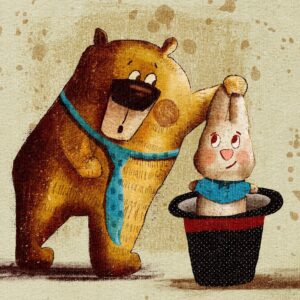
Setting boundaries is not like learning a magician’s trick. It is a choice to protect your mental energy, guard your time, and keep yourself from burning out. “Surprise!” the cheery voice announced after I answered the phone. This was years ago and the caller was the mother of one of my son’s friends. I wondered what surprise she had in mind. I considered the possibilities. Maybe she bought too many cheesecakes at Costco and wanted to give me one. Perhaps she has a beach house and wants to let me have it for a week.
She continued, “I’ll drive the boys to school tomorrow, and then…(surprise)…I will take you out for breakfast.”
I had things to do, tasks to complete, goals to accomplish, mountains to climb. Even if the mountain happened to be laundry. I had plans for the next day. Yet, the mother seemed so excited about her decision and her hope I would be overjoyed with her plan.
I didn’t know her well. I didn’t want to hurt her feelings or disappoint her.
I said, “That’s nice of you.”
The next morning, the mother and I sat opposite each other in a booth at a local café. We talked about our mutual connection, our sons. Soon the conversation lagged. The hash browns had the taste of overcooked drywall. I wasn’t in my usual chatty get-to-know-you mood. I wanted breakfast to be over.
Sometime later, a counselor assisted me in addressing my anxiety concerns. I mentioned the unwanted breakfast and my unhappiness with accepting the surprise.
“Wouldn’t it have been kinder to have told her ‘no’ in the beginning when she first extended the surprise?” the counselor said. “Instead, she had breakfast with a grumpy person.”
Suddenly, I had insight. Could I have said no without seeming rude or selfish? Could I have given myself a no-guilt pass by saying no?
Soon after this new revelation, a friend asked me to watch her toddler daughter while she and her husband went out. I said, “No, I’m sorry. I can’t.” After a pause, she said to me, “I’m happy you can say ‘no’ to me.”
I was happy too.
I now set boundaries so that I can live a balanced life free of burnout and stress. I say ‘no’ with kindness and honesty.
This has boosted my mental health by giving me peace and strengthened relationships.
Saying yes to please others is saying no to yourself. And, in my case, it also gave me the taste of shredded drywall disguised as hash browns.

Wow!!!! This was so relatable and educational! Thank u for sharing! Im certainly a new fan! ❤️
I appreciate you, Shallum!